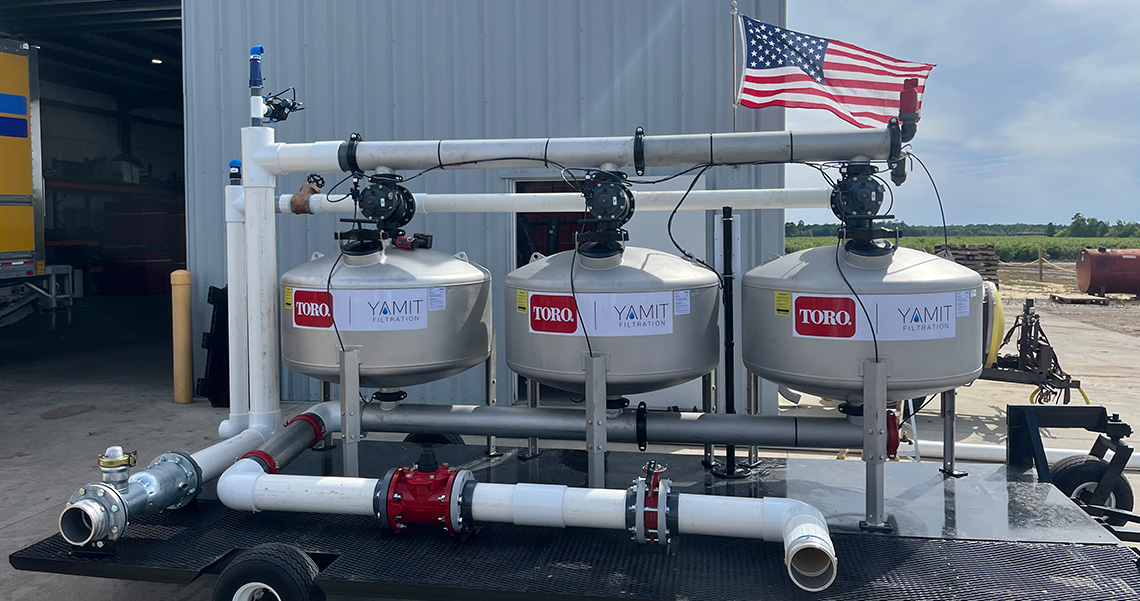
A reliable irrigation system is only as strong as the water moving through it. For growers, clogged emitters, uneven flow, pressure loss, and equipment wear can quickly turn into crop stress, labor costs, and downtime. The right filtration system helps protect your investment by removing debris before it creates problems in the field.
Filtration is not one-size-fits-all. The best option depends on your water source, irrigation design, crop needs, and the type of material you need to remove.
Why Filtration Matters
Water from ponds, wells, canals, reservoirs, and reclaimed sources can carry sand, algae, organic matter, silt, rust, or other particles. Even small debris can block drip tape, micro-sprinklers, valves, injectors, and regulators.
When filtration is working properly, growers often see more uniform irrigation, improved system efficiency, fewer repairs, and better distribution of fertilizers and crop inputs applied through irrigation.
Common Filtration Options
Screen filters are a practical choice for removing larger particles such as sand, grit, and debris. They are often used with relatively clean water sources and are available in manual or automatic cleaning designs. Screen filters are simple, cost-effective, and easy to inspect, but they may require frequent cleaning when water contains heavy organic matter.
Disc filters use stacked grooved discs to capture particles. They provide more surface area than many screen filters and can handle a wider range of debris. Disc filters are a strong option for drip irrigation systems because they can remove fine particles that may clog emitters. They also perform well when water quality varies throughout the season.
Media filters, sometimes called sand media filters, are often used when water contains algae, organic matter, or heavier biological loading. Water passes through a bed of media that traps contaminants. These systems are especially useful for surface water sources such as ponds, canals, and reservoirs. Media filters typically require backwashing, so proper sizing and maintenance are important.
Hydrocyclone sand separators are designed to remove heavier particles, especially sand, from irrigation water. They use spinning action to separate solids from the water stream before it reaches other filtration equipment. These are often installed ahead of screen, disc, or media filters to reduce clogging and wear. They are not designed to remove algae or lightweight organic matter.
Matching the Filter to the Problem
If you are dealing with sand from a well, a hydrocyclone sand separator followed by a screen or disc filter may be effective. If algae or organic debris from a pond is the issue, media filtration may be the better fit. If drip tape is clogging in scattered areas, finer filtration or improved maintenance may be needed.
The key is to identify the source of the clogging before choosing equipment. Water testing, system inspection, and pressure checks can help pinpoint the problem.
Maintenance Makes the Difference
Even the best filtration system needs regular attention. Growers should monitor pressure differences across filters, clean or backwash as recommended, inspect seals and screens, and check for buildup during high-use periods. A small pressure change can be an early warning sign that flow is being restricted.
Long-Term Value for Growers
Filtration is not just about keeping equipment clean. It is about delivering water and nutrients where the crop needs them, when it needs them. With the right system in place, growers can reduce downtime, improve irrigation uniformity, and make every acre easier to manage.
At TriEst Ag Group, we work with growers to support reliable, efficient irrigation systems built for field performance. From filtration solutions to complete irrigation system design, our team helps protect your investment and keep water moving where it matters most.
Learn more by contacting your local TriEst Ag Group today.