Filtration Systems That Keep Irrigation Running Smoothly

A reliable irrigation system is only as strong as the water moving through it. For growers, clogged emitters, uneven flow, pressure loss, and equipment wear can quickly turn into crop stress, labor costs, and downtime. The right filtration system helps protect your investment by removing debris before it creates problems in the field.

Filtration is not one-size-fits-all. The best option depends on your water source, irrigation design, crop needs, and the type of material you need to remove.

Why Filtration Matters

Water from ponds, wells, canals, reservoirs, and reclaimed sources can carry sand, algae, organic matter, silt, rust, or other particles. Even small debris can block drip tape, micro-sprinklers, valves, injectors, and regulators.

When filtration is working properly, growers often see more uniform irrigation, improved system efficiency, fewer repairs, and better distribution of fertilizers and crop inputs applied through irrigation.

Common Filtration Options

Screen filters are a practical choice for removing larger particles such as sand, grit, and debris. They are often used with relatively clean water sources and are available in manual or automatic cleaning designs. Screen filters are simple, cost-effective, and easy to inspect, but they may require frequent cleaning when water contains heavy organic matter.

Disc filters use stacked grooved discs to capture particles. They provide more surface area than many screen filters and can handle a wider range of debris. Disc filters are a strong option for drip irrigation systems because they can remove fine particles that may clog emitters. They also perform well when water quality varies throughout the season.

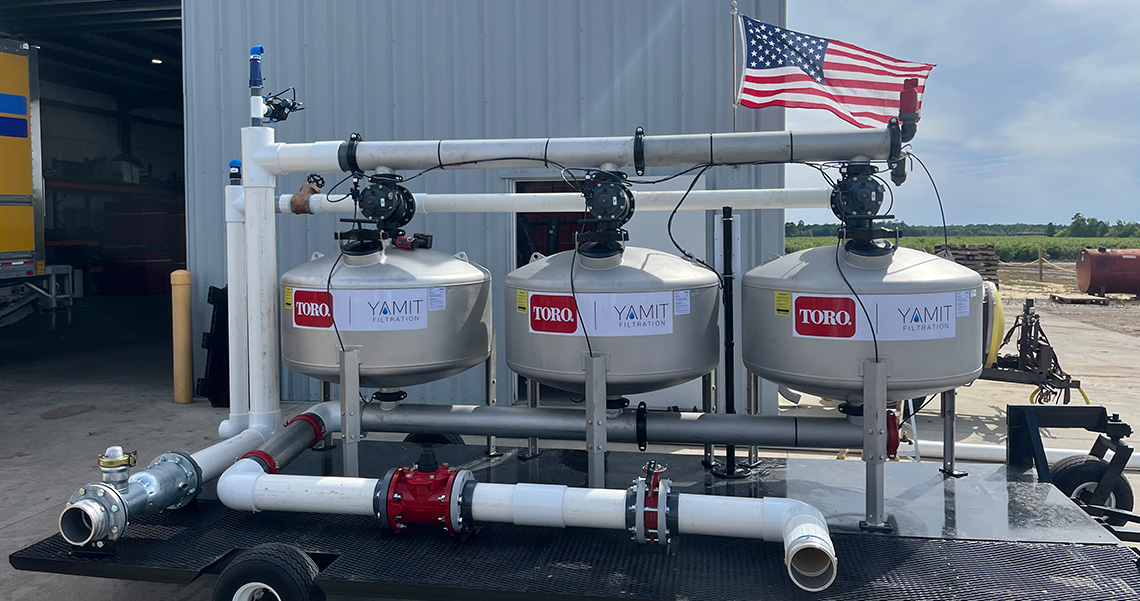
Media filters, sometimes called sand media filters, are often used when water contains algae, organic matter, or heavier biological loading. Water passes through a bed of media that traps contaminants. These systems are especially useful for surface water sources such as ponds, canals, and reservoirs. Media filters typically require backwashing, so proper sizing and maintenance are important.

Hydrocyclone sand separators are designed to remove heavier particles, especially sand, from irrigation water. They use spinning action to separate solids from the water stream before it reaches other filtration equipment. These are often installed ahead of screen, disc, or media filters to reduce clogging and wear. They are not designed to remove algae or lightweight organic matter.

Matching the Filter to the Problem

If you are dealing with sand from a well, a hydrocyclone sand separator followed by a screen or disc filter may be effective. If algae or organic debris from a pond is the issue, media filtration may be the better fit. If drip tape is clogging in scattered areas, finer filtration or improved maintenance may be needed.

The key is to identify the source of the clogging before choosing equipment. Water testing, system inspection, and pressure checks can help pinpoint the problem.

Maintenance Makes the Difference

Even the best filtration system needs regular attention. Growers should monitor pressure differences across filters, clean or backwash as recommended, inspect seals and screens, and check for buildup during high-use periods. A small pressure change can be an early warning sign that flow is being restricted.

Long-Term Value for Growers

Filtration is not just about keeping equipment clean. It is about delivering water and nutrients where the crop needs them, when it needs them. With the right system in place, growers can reduce downtime, improve irrigation uniformity, and make every acre easier to manage.

At TriEst Ag Group, we work with growers to support reliable, efficient irrigation systems built for field performance. From filtration solutions to complete irrigation system design, our team helps protect your investment and keep water moving where it matters most.

Learn more by contacting your local TriEst Ag Group today.
Why Smart Drip Irrigation is the Smartest Investment for Your Farm

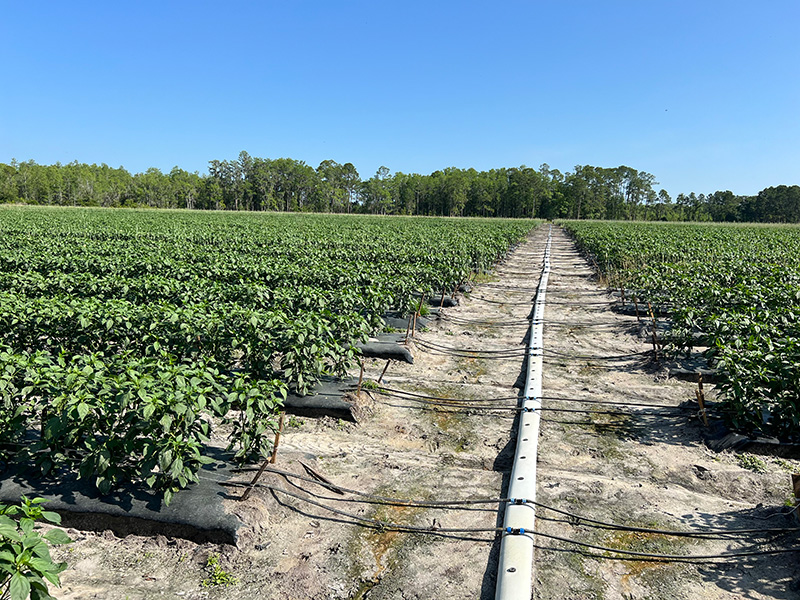
N.FL Jalapenos Drip Irrigation

Water, fertilizer, and energy are some of the most expensive inputs in farming today. At the same time, growers are under pressure to maximize yields while protecting resources. A drip irrigation system designed with smart irrigation technology meets these challenges head-on.

When built with irrigation design software used by qualified engineers, installed by trained automation professionals, and supported by quality components, drip irrigation becomes more than a watering method, it’s a complete management tool that pays back every season.

How Drip Irrigation Works

Unlike flood or sprinkler irrigation, drip irrigation delivers water directly to the root zone through a network of mainlines, submains, dripline, and emitters.

Key components include:

  • Mainline and submains – move water efficiently from the pump to the field.
  • Dripline or drip tape – applies water drop by drop at the plant row.
  • Pressure regulation and valves – maintain uniform delivery across the system.
  • Filtration – keeps water clean to prevent clogging.

The result? Consistent soil moisture, less evaporation, and reduced runoff. Most growers see 30–50% water savings compared to traditional irrigation methods—while improving crop uniformity and yield.

Precision Design with Smart Software

Every field has its own challenges: slope, soil type, crop spacing, and water source. Our design team utilizes software that allows them to model these factors and calculate system hydraulics before installation.

That means:

  • Correct pipe sizing that considers capital cost versus long term energy cost.
  • Overall design layouts that keep the grower’s system manageably in mind.
  • Uniform pressure and flow to every emitter.
  • A system that integrates easily with automation and fertigation.
  • In short, a design that works from day one and saves money long-term.
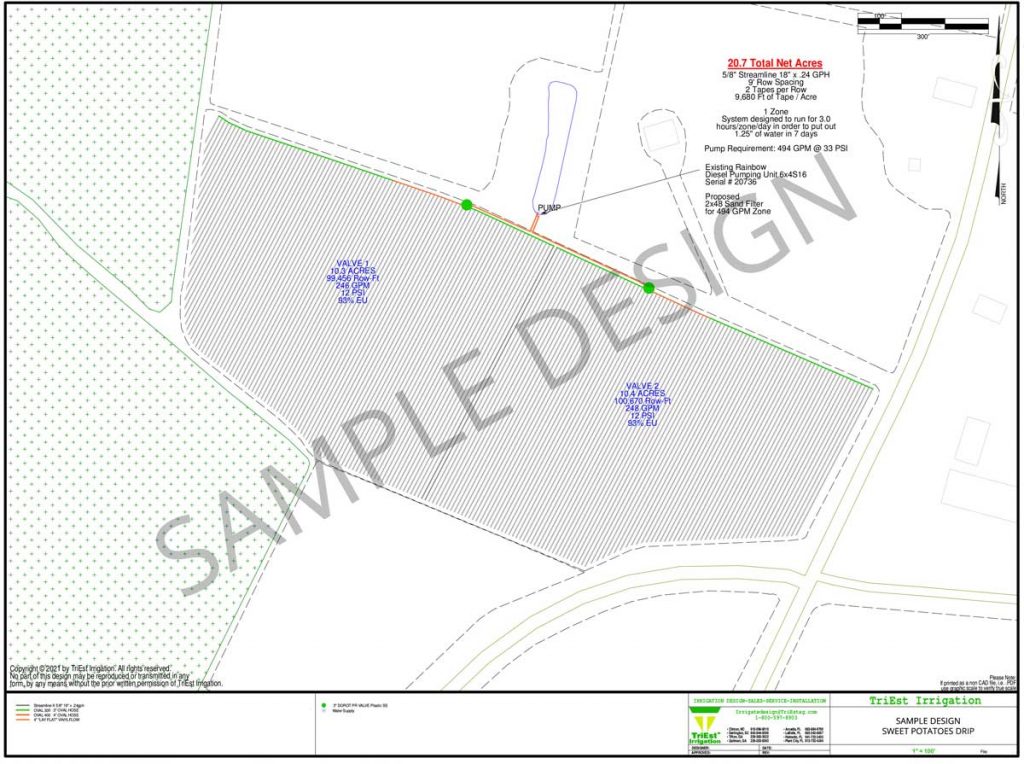
Sample Irrigation Design

Automation: Smarter Irrigation Management

Irrigation automation takes a grower’s control out of guesswork and into data-driven precision. Automated controllers use timers, soil moisture sensors, and climate data to irrigate only when needed.

Growers can monitor and adjust from a phone, tablet, or computer. The benefits are clear:

  • Labor savings—no more walking valves across fields.
  • Consistency—uniform irrigation regardless of who’s on shift.
  • Better decision-making—detailed records of water use and scheduling.
  • Fertigation: nutrients at the root zone.

With drip irrigation, you can do more than apply water. Fertigation injects nutrients directly into the drip system, delivering small, frequent doses right where roots can absorb them.

Advantages include:

  • Reduced fertilizer use.
  • Minimal nutrient loss to leaching.
  • More uniform plant growth and higher quality crops.

Pumping and Filtration: The Backbone of the System

  • A smart irrigation system is only as strong as its pump and filters.
  • Pumping stations provide the correct pressure and flow for consistent irrigation. Many systems can be tied into automation controls for remote management.
  • Filtration systems—whether it is a sand media, disc, or screen filter—are essential for clean, clog-free operation. Reliable filtration protects emitters and ensures long-term performance.
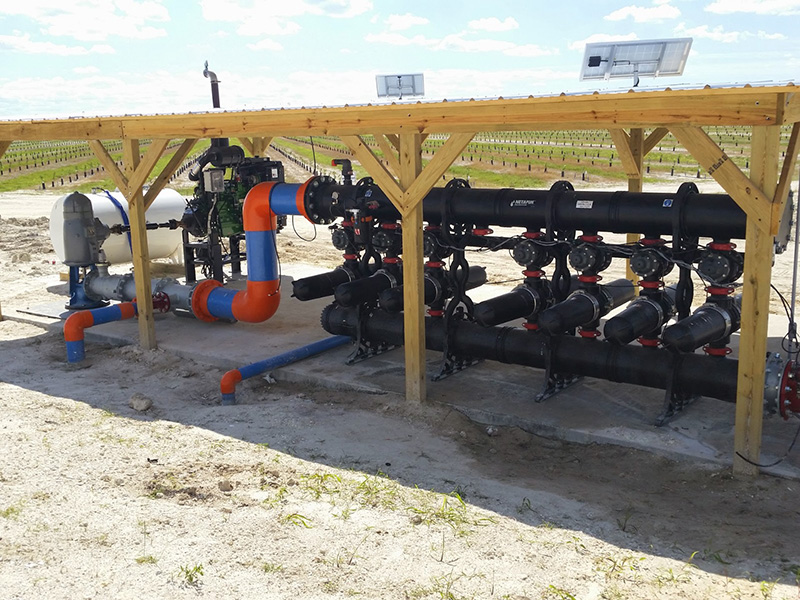
Citrus Filter/Pump Station.

Why Quality Parts and Qualified Installers Matter

Cutting corners on irrigation rarely pays off. Low-cost parts wear out quickly, causing downtime and costly repairs. Improper installation can lead to uneven watering, wasted fertilizer, and crop stress.

Working with certified irrigation designers, trained automation installers, and trusted suppliers ensures your system is built to last and perform at peak efficiency.

The Takeaway

A smart drip irrigation system combines precision water delivery, automation, fertigation, and reliable pumping and filtration into one powerful management tool. The result: lower input costs, higher yields, and long-term sustainability.

At TriEst Ag Group, we provide growers with expert irrigation design, automation installation, and high-quality components—backed by decades of experience.

👉 Ready to upgrade your irrigation system or just learn what a well-designed irrigation system can do for your crop? Contact us HERE today.

Soil to Substrate: Key Irrigation and Fertigation Ideas for Long Cane Raspberries

The Comparison

Traditional soil production for soft fruit crops is a buffered system that is slow to change, whether good or bad. Fertigation mistakes in a traditional soil system isn’t necessarily going to be detrimental, or result is major pH or nutrient changes. For the same reasons, soil deficiencies or incorrect pH ranges are more difficult to correct in traditional systems.

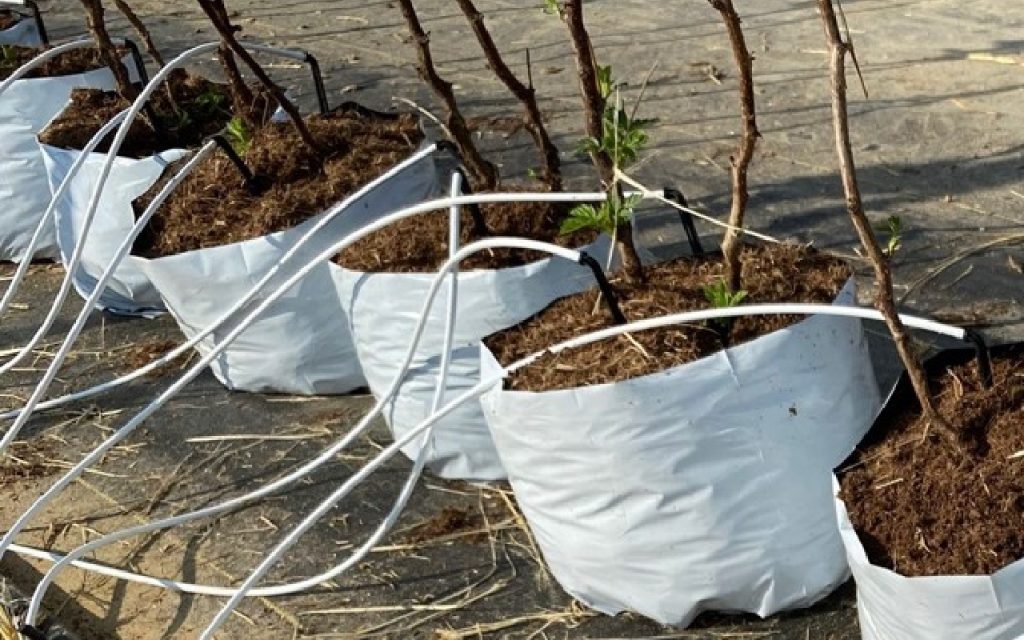
The difference in a substrate system is significant. It is a low volume potted container area that is essentially fed by an IV nutrient solution, so fertigation changes can result in major nutrient or pH shifts within a matter of hours. So, this situation is both good and bad – you can correct your mistakes very quickly and you can make mistakes very quickly. Think of substrate as a high risk, high reward type system where your attention to detail is very important.

Moving forward with those differences in growing systems pointed out let’s lay out some key ideas for growing.

Plant Nutrition and PH

Starting with the right pH is key in a soil system for berries, or you’ll be fighting it all season long, but impact in season is minimal with the right fertility program. Most soil systems are high volume of fertilizers and water, with low frequency of runs for irrigation and fertigation. Fertility in soil systems are referred to in terms of pounds per acre. The southeast typically has programs of 150-30-200#/acre NPK with 30-50# S and 40-50# Ca. Fertigation is supplied commonly with potassium nitrate/calcium nitrate/UAN style blends (a 5-1-7 with 2% Ca for example). We do a lot of these type blends in traditional soil production of soft fruit, with sulfur being supplied as a supplement.

In a substrate system, the program is the opposite of a soils system. Low volume and high frequency systems run typically for 2-3 minutes at a time 20-30 times daily. Fertigation is driven by PPM (parts per million) to target crops by each stage every irrigation cycle. Fertility isn’t driven by pounds of nutrient applied per acre, but crop demand of a balanced nutrient solution based on irrigation needs. It is also critical to realize that rapid pH manipulation is possible through water treatment and fertilizer selection. Just think about the size of the pot and the tight area the plant is in. So, as a grower, you have to re-calibrate yourself in this type of system to be more targeted and understand how quickly changes can be made.

Water Quality

Water quality is the first factor in determining a proper nutrient and irrigation plan for a substrate crop. Well, municipal, and surface water is variable and should be regularly tested for pH, EC, and iron. Managing pH is very important particularly in substrate systems as highlighted earlier. Making assumptions about your source water can lead to big mistakes, test first.

Injection Systems and Fertilizer Sources

When you look at injection systems to create a fertility base like we’ve been discussing it is generally a two-stage injection system that will allow growers to run one tank that is calcium based and another being sulfur based. Calcium and sulfur don’t play nice as fertilizer concentrates, so this split is the most natural way to begin your fertility program. Both tanks can be run as a diluted mix simultaneously, pending quality and dilution rate.

Nutrient form matters! The form you choose to use can have a large impact on your pH (especially nitrogen). Water-soluble blends are the recommended best option for a substrate system due to the ability for customization. Drip grade liquid fertilizers are an option with reduced labor, but it can’t be customized as much, as the scale for drip fertigation is much larger and is made in greater quantities typically. There are many options to find the same end goal for nutrition, as long as the product form/ratios are correct.

Last Thoughts

There are a lot of factors that need to be monitored in both substrate and soil systems. You can go from a very simple, labor intensive style to monitor pH, water quality, nutrients, and E/C which does work or you can start adding layers of sensors and automation. To learn more you can reach out to our team and they can help you research solutions that will work best for you and your substrate production needs.