Micro-Sprinkler vs Drip Irrigation in Orchards: Choosing the Right System

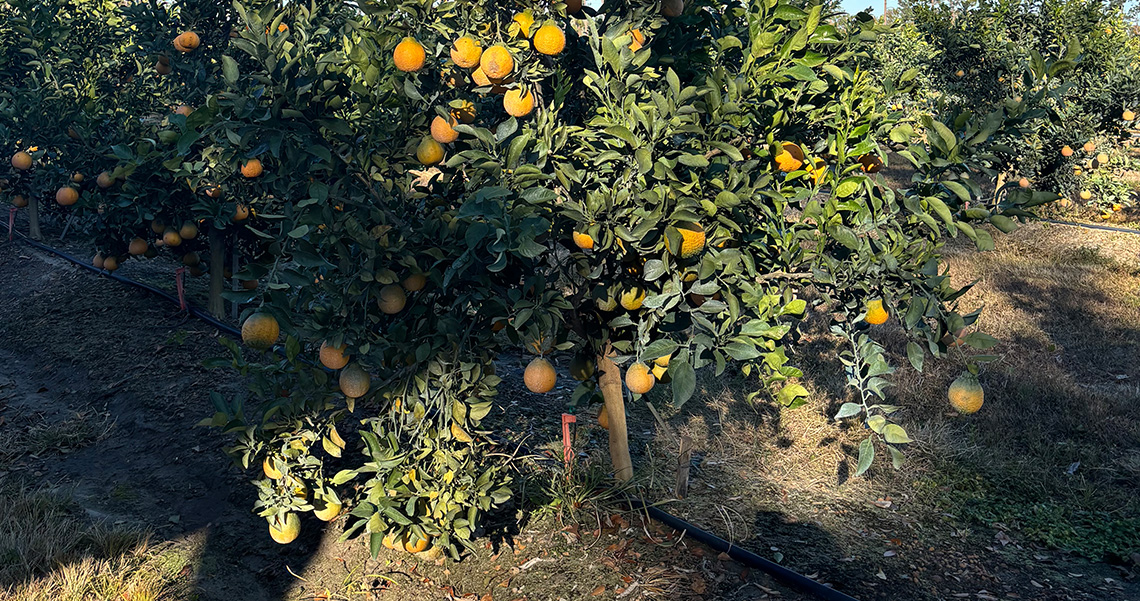
Micro-Sprinkler on Citrus Orchard

Selecting the right orchard irrigation system is a key decision that impacts tree health, water efficiency, and long-term productivity. Two of the most common options are drip irrigation and micro-sprinkler systems. Each offers distinct advantages depending on crop type, soil conditions, and management goals.

Drip irrigation delivers water directly to the base of each tree through emitters that apply water at a single point. This method is highly efficient, minimizing evaporation and runoff. It is particularly effective in regions with limited water supply or in soils where precise moisture control is required. Drip systems also work well for fertigation, allowing nutrients to be delivered directly to the root zone with minimal waste.

However, drip irrigation wets a relatively small area of soil. In orchard settings, this can limit root expansion, especially as trees mature. To compensate, growers may need to add additional emitters over time, which can increase system complexity and maintenance.

Micro-sprinkler systems, often referred to as micro-jet irrigation, distribute water over a larger wetted area. This broader coverage encourages more uniform root development and better soil moisture distribution. For crops like citrus, pecans, and apples, where root systems expand significantly, micro-sprinklers provide a more adaptable solution.

Another advantage of micro-sprinklers is flexibility. Spray patterns, flow rates, and wetted diameters can be adjusted as trees grow, allowing a single system to support both young and mature orchards. These systems are also beneficial for additional applications such as cooling and frost protection, which drip irrigation cannot provide.

From a design perspective, micro-sprinklers are often more forgiving in variable soils, as they reduce the risk of localized dry spots. Pressure compensating options further improve uniformity in orchards with elevation changes or long row lengths.

The primary tradeoff is water efficiency. Because micro-sprinklers wet a larger surface area, there is slightly more evaporation compared to drip systems. Proper scheduling and system design are essential to minimize these losses.

Ultimately, the choice between drip and micro-sprinkler irrigation depends on your orchard’s specific needs. Drip irrigation offers maximum water efficiency and precise control, while micro-sprinklers provide better soil coverage, flexibility, and support for long term tree growth. A well-designed system, regardless of type, will deliver uniform water distribution and support consistent orchard performance.

At TriEst Ag Group, we provide growers with expert irrigation design, automation installation, and high-quality components, backed by decades of experience.

Ready to upgrade your irrigation system or learn what a well-designed irrigation system can do for your orchard? Contact us at https://triestag.com/contact-us/ today.

Tackling Tillage, Part III: Advancing Application Precision in Strip-Till Fumigation

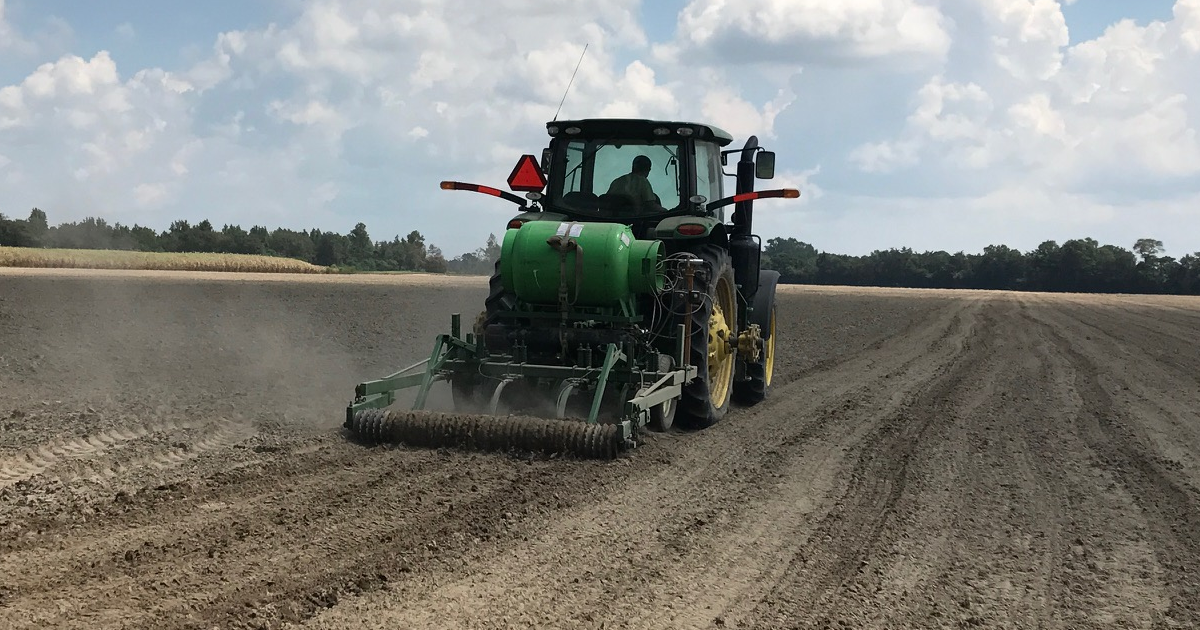
Following the initial success of our strip-till fumigation trials, our team continued refining the system to improve application precision, soil coverage, and seed-to-fumigated-soil contact. Part II demonstrated that the foundational strip-till configuration delivered promising performance, including strong suppression of common scab and system efficiency comparable to grower-standard raised, pressed beds.

However, the opportunity to elevate the system further became clear.

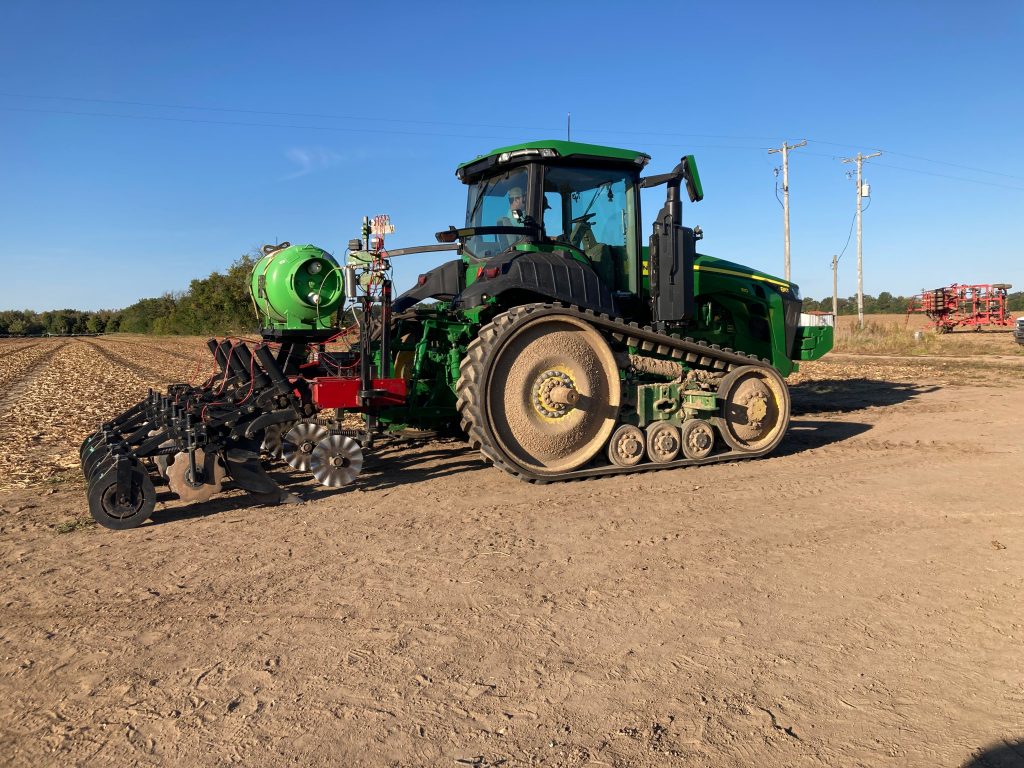
Part III highlights the next stage of development, drawing from TriEst’s engineering work and the evolution of our Strip-Till Equipment platform, which was designed to enhance adaptability, optimize seedbed conditions, and improve fumigant coverage across a range of field environments.


Refining the System: What We Set Out to Improve

Year one demonstrated the potential of strip-till fumigation as a reduced-tillage, targeted soil fumigation solution. But our data also underscored three improvement priorities:

• Bringing the application point closer to the seed piece to support more consistent yields.
• Increasing treated soil movement into the planting zone.
• Improving consistency in surface sealing to maintain fumigant concentration.

The Strip-Till Equipment framework, with its modular design and adjustable soil-finishing components, provided the adaptability needed to make these refinements.


Key Equipment Enhancements Based on Trial Learnings

1. Adjustable Bed-Forming Capability

Early field work indicated that pulling more fumigated soil into the seed zone could increase tuber set and uniformity. The Strip-Till Equipment system was adapted to allow operators to create a modest 2–3 inch raised bed when desired. This improvement helped ensure that the planted seed piece consistently engaged with treated soil for improved early development

2. Floating Soil-Finishing Rollers

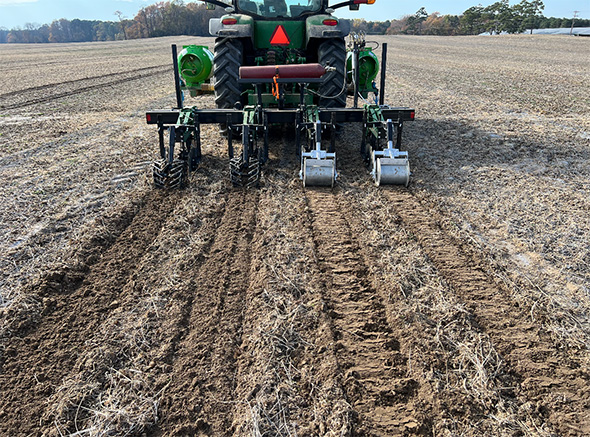
To improve surface sealing and reduce variability caused by different moisture and residue conditions, floating rollers were added to deliver more consistent compaction and closure over the chisel trace. This upgrade addressed chimneying potential and helped maintain fumigant concentration in the zone where it is most effective.

3. Adjustable Closing Discs for Flexible Seedbed Architecture

Closing disc assemblies were redesigned to allow simple adjustment up or down to fine-tune bed height or maintain a flat finish, depending on the grower’s planting system. This ensured that strip-till fumigation could integrate smoothly with both raised-bed and flat potato production systems without major equipment changes between fields

4. Dual-Depth Fumigation Integration

One of the most impactful advancements was the addition of dual-depth application capability, with approximately four inches of vertical separation between application zones. Dual-depth application improves soil coverage, supports more thorough pest and disease suppression, and provides greater flexibility in managing soilborne challenges such as nematodes or scab organisms. This feature represents a major step forward in precision soil fumigation and was designed specifically to enhance adaptability across different soil types and tillage practices


Performance Observed in Follow-Up Trials

With these enhancements implemented, the second year of evaluation focused on three primary performance metrics:

1. Improved Placement Relative to the Seed Piece

Moving application depth and geometry closer to where the crop is produced resulted in more consistent stand establishment and early vigor compared to the first year. Bringing the fumigated zone into better spatial alignment with the seed piece directly addressed the yield gap observed in Part II.

2. Enhanced Soil Coverage and Integrity

Adjustable bed-forming, paired with floating rollers, produced a more stable surface seal and improved horizontal movement of treated soil. This created a more uniform treated zone that better supported tuber initiation and reduced variability across replications.

3. Greater Flexibility with Fewer Adjustments

One of the core principles of the Strip-Till Equipment system is adaptability with minimal downtime. Across diverse conditions, operators were able to adjust bed height, closing pressure, and application depth quickly, reducing field variability and improving operational efficiency. This aligns with the original design intent of developing a system compatible with no-till, strip-till, or full tillage environments without major mechanical modifications


Where This Leads: A More Precise and Adaptable Fumigation System

The combined results of the first two years confirm that strip-till fumigation, when paired with the refined Strip-Till Equipment system, offers a strong path forward for growers seeking:

• Reduced tillage with maintained soil fumigation efficacy
• Improved seed-to-treated-soil contact
• Greater control over fumigant placement and coverage
• Flexibility across planting systems and soil conditions
• Efficient field operation with minimal adjustments

Our commitment to continuous improvement in equipment and application strategy supports growers as they adopt reduced-tillage systems without compromising crop protection or yield potential.

To learn more about how Strip-Till Equipment and advanced soil fumigation systems can support your operation, contact your local TriEst Ag Group representative. We welcome the opportunity to discuss how this approach can be tailored to your specific crops, soils, and production goals.

Tackling Tillage, Part II: Field Results from Our Strip-Till Fumigation Trials

Soil fumigation has long been a cornerstone of crop production, helping growers manage pests, disease, and weeds while giving plants the best possible start. Like all aspects of modern agriculture, fumigation has required evolution – driven by new technologies, grower needs, and a push for more efficient, targeted practices. In response to these needs and the necessity for evolution, TriEst Ag has developed a reduced-tillage fumigation system using strip-till technology.

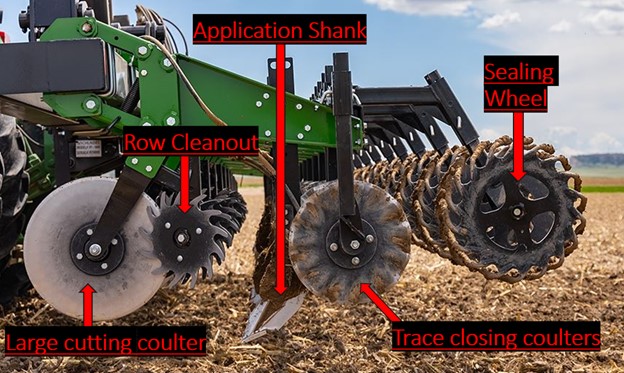
In our last blog, we discussed the pros and cons of reducing tillage in agricultural systems and outlined our equipment suite used for the application. A quick review: the equipment used for this process is really broken down into five steps:

  1. Large straight edge coulter (cutting coulter): cuts through field debris in the center of the row.
  2. Notched coulter (row cleanout): grabs the cut field debris and throws it out of the strip.
  3. Shank: provides deep tillage to reduce compaction in the root zone while applying the fumigant product.
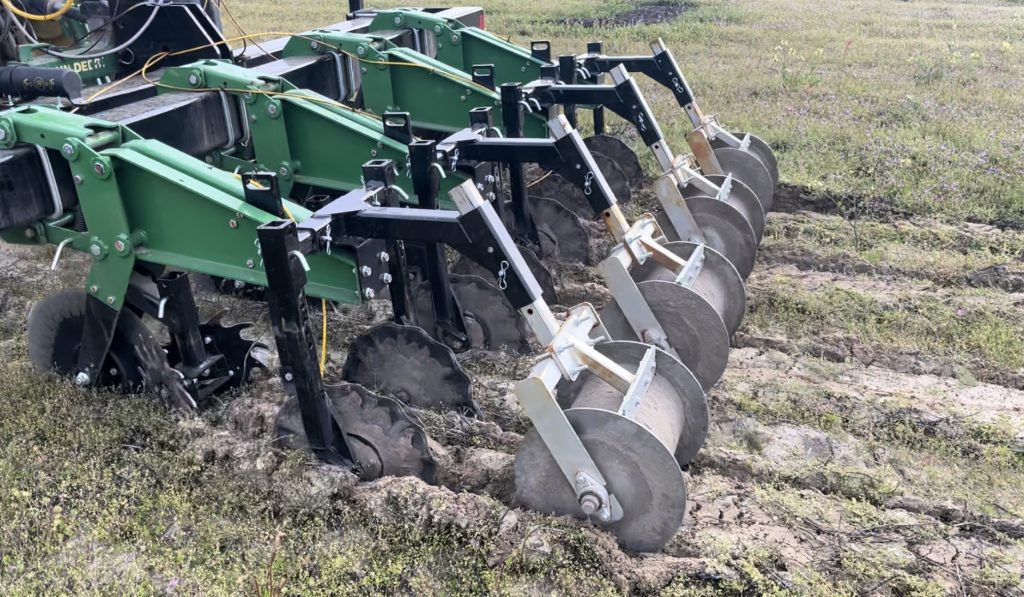
  4. Set of wavy coulters (closing discs): Pinch the soil behind the shank to shut down the chisel trace and eliminate any chimney effect.
  5. Compacting wheel (several options pending the desired final surface): seals the tilled area after the shank trace has been closed.

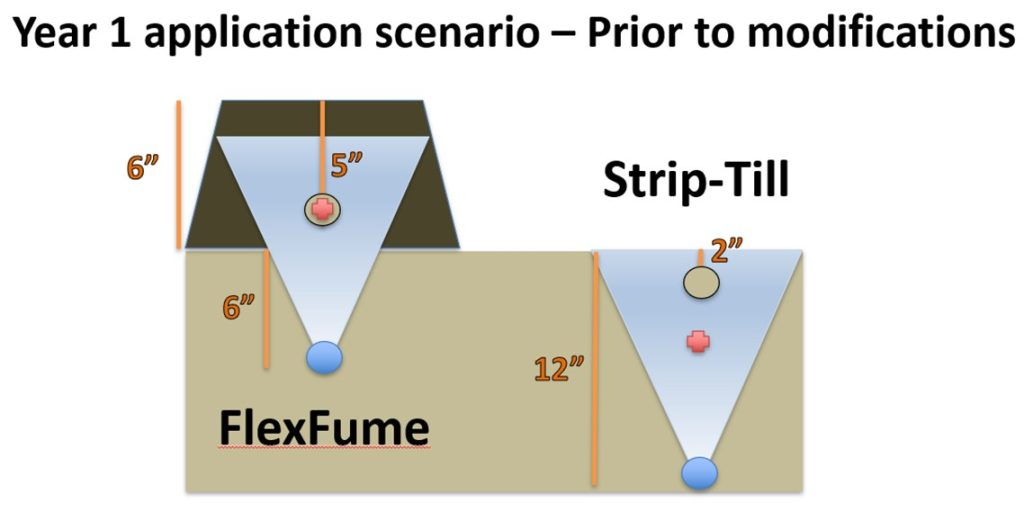
While we were pleased to have a working strip-till fumigation option, the question of efficacy remained when comparing it to grower-standard practices for applying chloropicrin-based products. In the case of the trial grower represented in this data, the standard practice was a Fall fumigation in a raised row system completed with a pressed bed (FlexFume). In the Spring prior to planting, the beds are freshened with the same fumigation rig modified with cultivators in place of the bed press (FlexTill). A pressed bed is a standard treatment for several key reasons:

  • Creates a controlled environment that isolates treated soil in the bed from untreated soil in the row middles.
  • Helps maintain soil fumigant concentration over time and increases efficacy.
  • Warms up faster as planting approaches, creating a wider planting window.
  • Allows fall-fumigated beds to be worked in the spring with limited movement of untreated soil from the middles.
  • Provides flexibility in application depth due to stacking soil above the “flat” or soil-surface line.
Grower Standard

Our trial compared the raised, pressed bed system against strip-till fumigation in a side-by-side demonstration, with yields collected across six replications in each treatment. Both systems delivered 100 lbs/acre of Chloropicrin active ingredient, applied primarily for suppression of nematodes and common scab. Red Norland was the grower’s chosen variety and was sold into the fresh market.

Comparing Strip-Till to Grower Standard

Our key considerations when comparing these two systems were:

  • Movement of untreated soil during spring tillage required for residue management prior to planting. We chose to run vertical tillage with no gain or angle on the discs, limiting side-to-side movement of soil.
  • Depth of application and fumigation coverage in relation to where the potato seed piece is planted and majority of the crop is going to be produced. A label requirement of 12” from nearest soil to air interface must be met for these applications.
  • Depth of planting differences between a bedded and flat potato production system. In a bedded system, the planter will open up the bed and drop a seed piece 4-5” deep into the bed and then seal the bed back together. In a flat system, the seed piece is planted shallower to reduce compaction, approximately 2”, and the planter then stacks a hill on top of the seed piece.

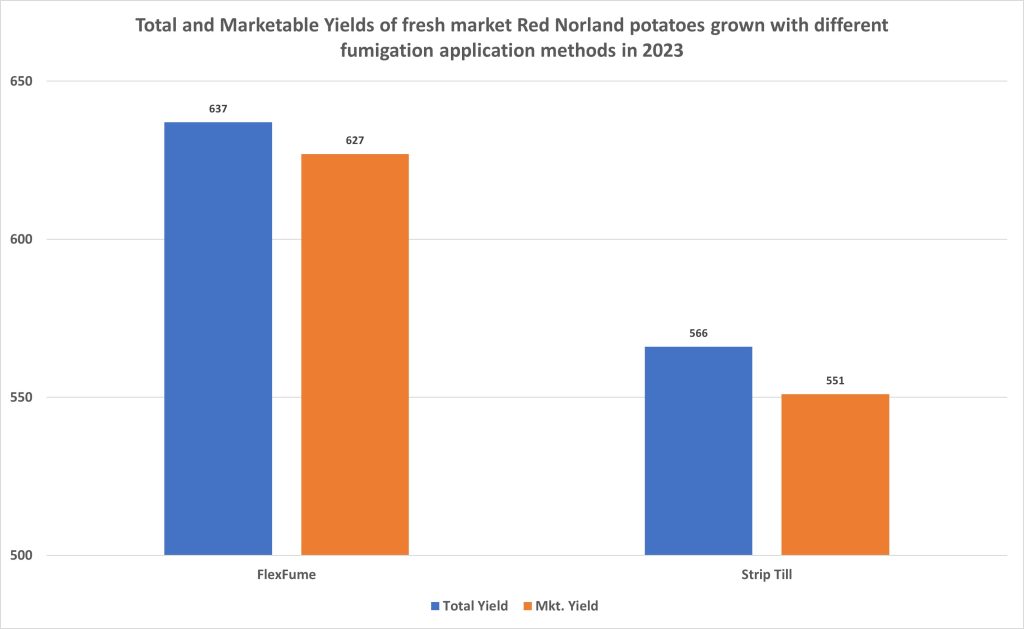
Year one showed promising results with good common scab suppression at less than 5%, similar to the proven grower standard. The total yield lagged behind by 71 cwt, which we believe can be improved by getting the application point closer to the seed piece. Ultimately, these results were encouraging and provide a solid framework to build upon.

In our next blog, we will cover application modifications made based on this trial and additional trial yields resulting from those changes. If you have questions or want to see results in your field you can reach out to talk to your local sales representative here.

Why Smart Drip Irrigation is the Smartest Investment for Your Farm

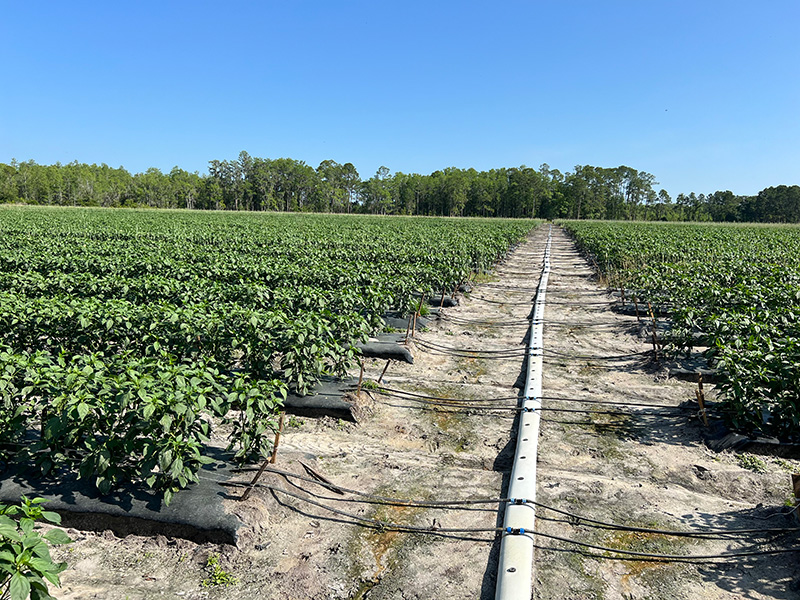
N.FL Jalapenos Drip Irrigation

Water, fertilizer, and energy are some of the most expensive inputs in farming today. At the same time, growers are under pressure to maximize yields while protecting resources. A drip irrigation system designed with smart irrigation technology meets these challenges head-on.

When built with irrigation design software used by qualified engineers, installed by trained automation professionals, and supported by quality components, drip irrigation becomes more than a watering method, it’s a complete management tool that pays back every season.

How Drip Irrigation Works

Unlike flood or sprinkler irrigation, drip irrigation delivers water directly to the root zone through a network of mainlines, submains, dripline, and emitters.

Key components include:

  • Mainline and submains – move water efficiently from the pump to the field.
  • Dripline or drip tape – applies water drop by drop at the plant row.
  • Pressure regulation and valves – maintain uniform delivery across the system.
  • Filtration – keeps water clean to prevent clogging.

The result? Consistent soil moisture, less evaporation, and reduced runoff. Most growers see 30–50% water savings compared to traditional irrigation methods—while improving crop uniformity and yield.

Precision Design with Smart Software

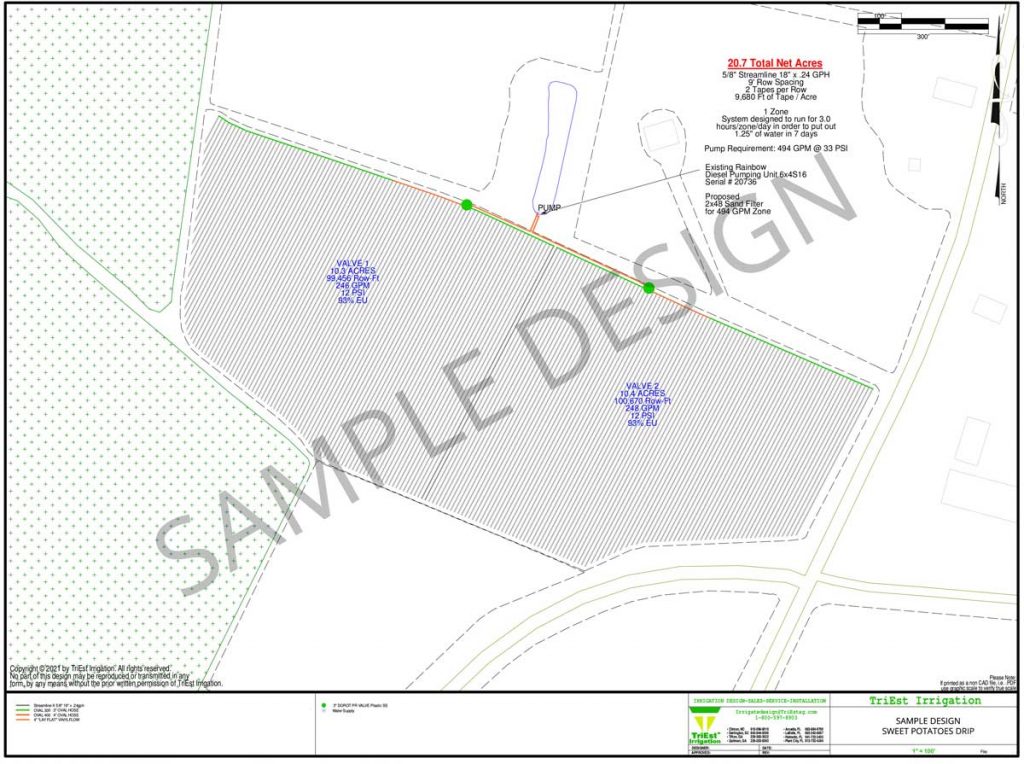
Every field has its own challenges: slope, soil type, crop spacing, and water source. Our design team utilizes software that allows them to model these factors and calculate system hydraulics before installation.

That means:

  • Correct pipe sizing that considers capital cost versus long term energy cost.
  • Overall design layouts that keep the grower’s system manageably in mind.
  • Uniform pressure and flow to every emitter.
  • A system that integrates easily with automation and fertigation.
  • In short, a design that works from day one and saves money long-term.
Sample Irrigation Design

Automation: Smarter Irrigation Management

Irrigation automation takes a grower’s control out of guesswork and into data-driven precision. Automated controllers use timers, soil moisture sensors, and climate data to irrigate only when needed.

Growers can monitor and adjust from a phone, tablet, or computer. The benefits are clear:

  • Labor savings—no more walking valves across fields.
  • Consistency—uniform irrigation regardless of who’s on shift.
  • Better decision-making—detailed records of water use and scheduling.
  • Fertigation: nutrients at the root zone.

With drip irrigation, you can do more than apply water. Fertigation injects nutrients directly into the drip system, delivering small, frequent doses right where roots can absorb them.

Advantages include:

  • Reduced fertilizer use.
  • Minimal nutrient loss to leaching.
  • More uniform plant growth and higher quality crops.

Pumping and Filtration: The Backbone of the System

  • A smart irrigation system is only as strong as its pump and filters.
  • Pumping stations provide the correct pressure and flow for consistent irrigation. Many systems can be tied into automation controls for remote management.
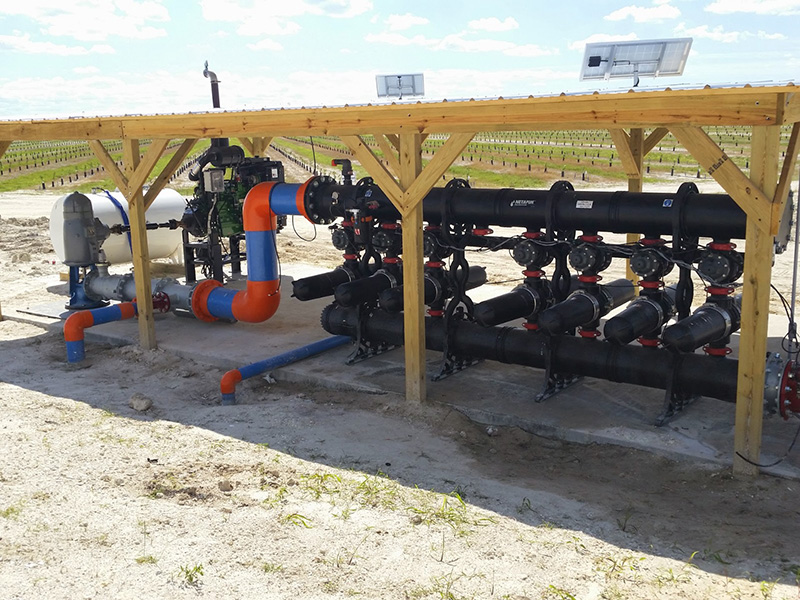
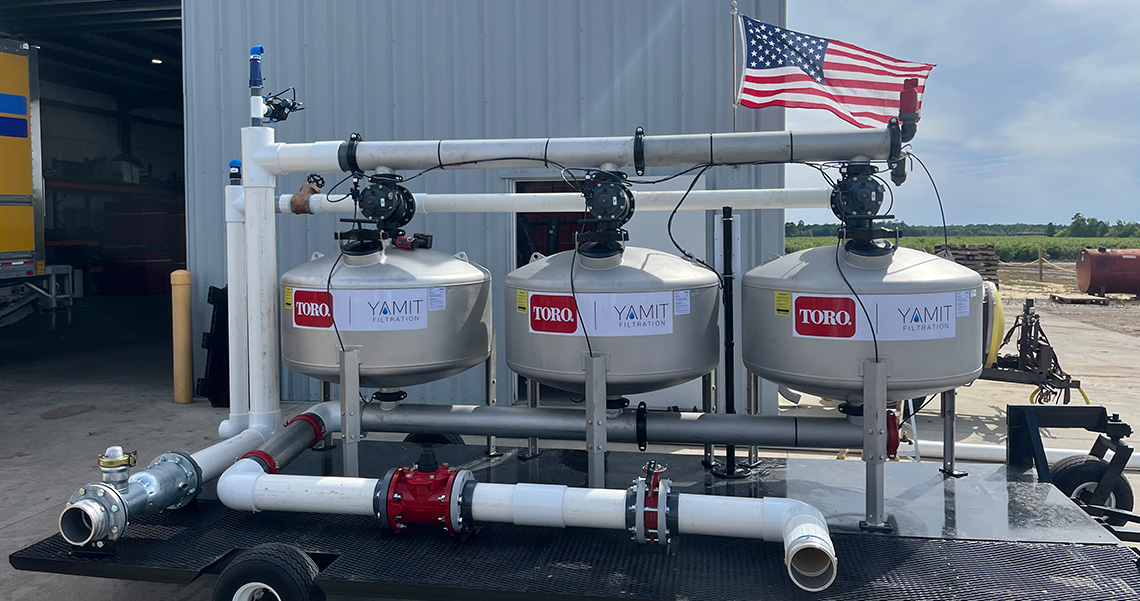
  • Filtration systems—whether it is a sand media, disc, or screen filter—are essential for clean, clog-free operation. Reliable filtration protects emitters and ensures long-term performance.
Citrus Filter/Pump Station.

Why Quality Parts and Qualified Installers Matter

Cutting corners on irrigation rarely pays off. Low-cost parts wear out quickly, causing downtime and costly repairs. Improper installation can lead to uneven watering, wasted fertilizer, and crop stress.

Working with certified irrigation designers, trained automation installers, and trusted suppliers ensures your system is built to last and perform at peak efficiency.

The Takeaway

A smart drip irrigation system combines precision water delivery, automation, fertigation, and reliable pumping and filtration into one powerful management tool. The result: lower input costs, higher yields, and long-term sustainability.

At TriEst Ag Group, we provide growers with expert irrigation design, automation installation, and high-quality components—backed by decades of experience.

👉 Ready to upgrade your irrigation system or just learn what a well-designed irrigation system can do for your crop? Contact us HERE today.

Tackling Tillage: Why Strip-Till Soil Fumigation Matters

Reduced tillage systems have become a focal point throughout agriculture in recent years. The logic behind incorporating tillage reduction is clear, as there are many benefits associated for both the farmer and the land they tend.

  • Reduced soil erosion
  • Preserve soil structure
  • Lessen impact on soil microbiome
  • Reduced production costs
  • Better water management

With all that being said, tillage is also a critical component in the production system of many crops, especially potato. Two things can be right at one time, this is true of the importance of tillage in agriculture and the advantages of reduced tillage systems. It is important to remember that standard systems developed over time for a reason, because they were needed and effective. Conventional tillage provides:

  • improved aeriation
  • weed suppression
  • Incorporation of fertility and pest control products
  • Hard-pan improvements with deep tillage
  • Seedbed preparation

As with any decisions we make in agriculture, there is a push and pull relationship to anything we do. The intent should be to maximize advantages while limiting the disadvantages and result on a net gain in the end. A friend and colleague of mine in agriculture compared this to counting calories while looking at a menu in a restaurant. You can have tillage, but it comes at a cost. Portion sizes matter and if we want a large portion, what are you willing to give up to stay under the threshold?

A larger sector of agricultural producers are introducing reduced tillage into their cultural systems and TriEst Ag Group recognized the need to investigate the use of Chloropicrin in this manner. It’s important that we innovate and evolve alongside our customer base. Much like conventional tillage systems being a standard for a reason, there are principles to fumigation that are required by label to ensure proper handling and efficacy.

  • Soil properly prepared in seedbed condition and free of clods at time of application
  • Soil moisture at 50% or greater and soil temperatures less than 90 F at the time and depth of application
  • Application depth must be 12” from the nearest air to soil interface
  • Field residue must be managed, little crop residue on soil surface that can’t impact soil seal
  • For soil sealing, soil must be uniformly mixed to at least a depth of 3 inches to eliminate the chisel trace.  Following elimination of the chisel trace, the soil surface must be compacted or pressed to complete the seal

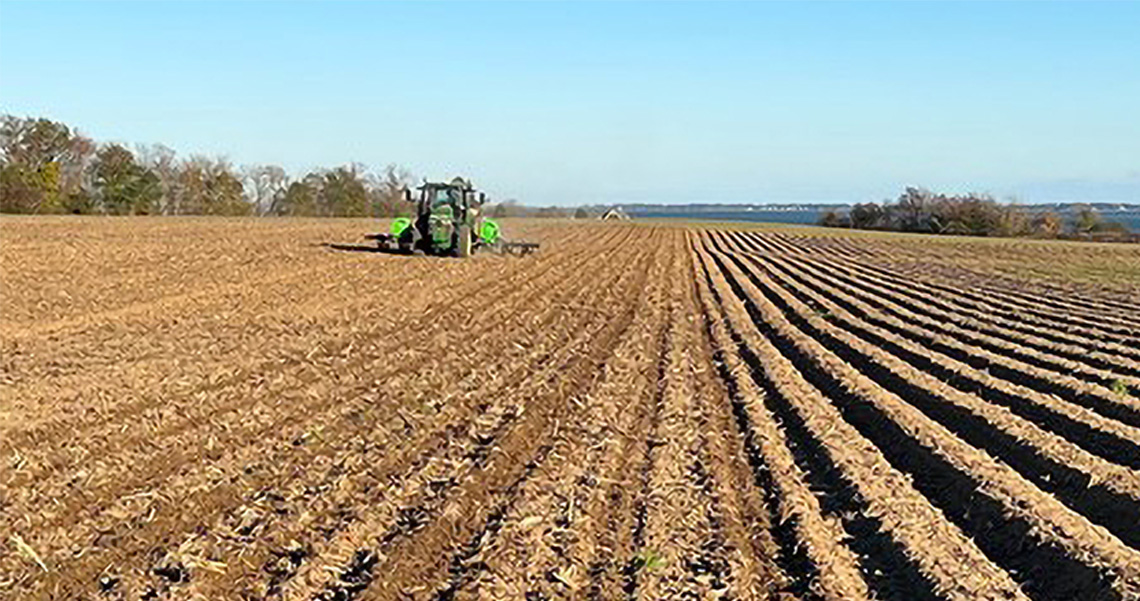
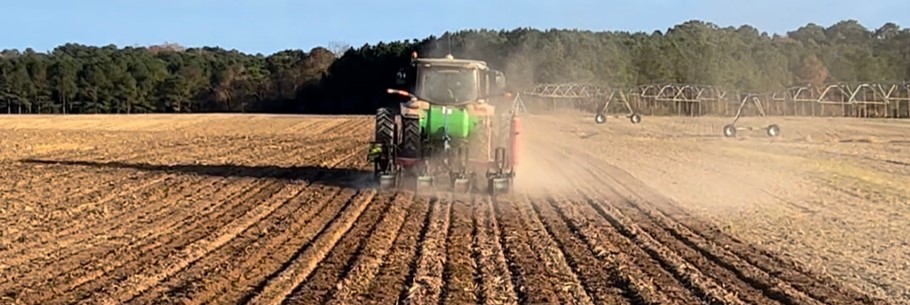
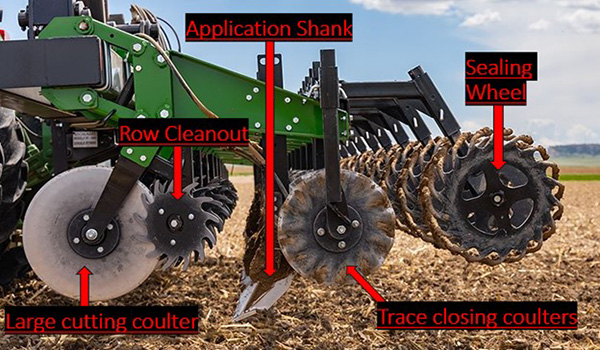
Similar to our customers, it’s quite the challenge to figure out how to accomplish reducing tillage and maintaining efficacy for growing a productive crop. Over the past three years, TriEst Ag Group has worked diligently with grower cooperators to develop equipment application options to achieve these goals. The result of these efforts is strip-till fumigation. As the name implies, with this method we are only applying tillage in the “strip” or area where fumigant is specifically being applied in the row. The equipment used for this process is really broken down into five steps:

  1. Large straight edge coulter (cutting coulter) that cuts through field debris in the center of the row
  2. Notched coulter (row cleanout) that grabs the cut field debris and throws it out of the strip
  3. Shank that is providing deep tillage to reduce compaction in the root zone and applying the fumigant product
  4. Set of wavy coulters (closing discs) that are pinching the soil behind the shank to shut down the chisel trace and eliminate any chimney effect
  5. Compacting wheel (several options pending the desired final surface) is sealing the tilled area after the shank trace has been closed

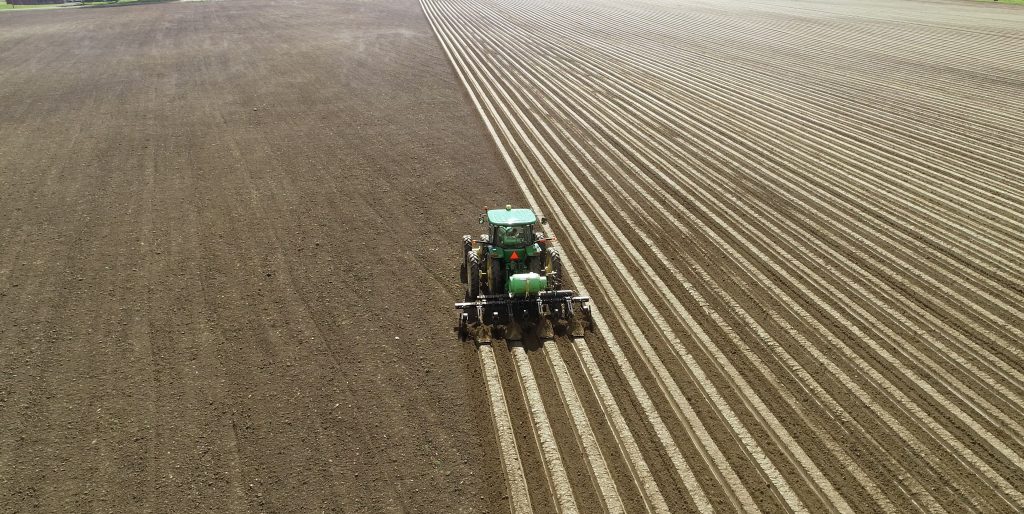
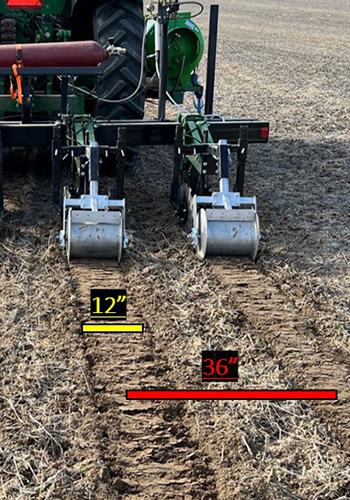
A lot of our development work has been focused on potato growing systems, so we will use that as an example. Potato is typically grown on 34″-40” row centers and our tillage/application strip is 12” wide, which encompasses the area the potatoes will be grown in. If we use a 36” row center example, 12” divided into 36” equals 33%, representing the percentage of land that is tilled. This effectively reduces tillage by 67% for our fumigation application.

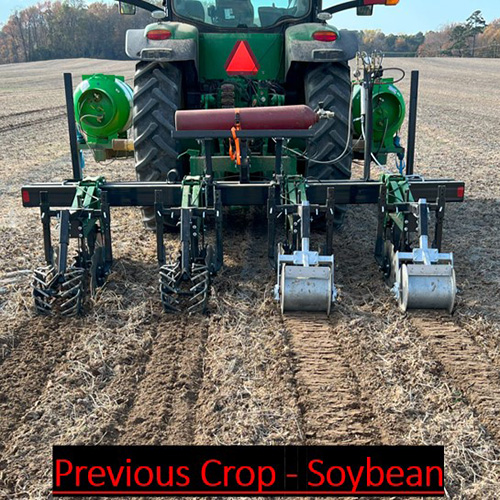
The tillage reduction is magnified several times over when you consider the preparation tillage passes prior to the application that are also removed. The number of passes and costs associated are on a case-by-case basis, as all farming operations have different procedures. The previous crop is also very important in this discussion, due to the level of difficulty associated with heavier residue. A few good examples from potato growing systems would be:

  • Prior crop being soybeans or a small grain – one disc pass prior to application pass
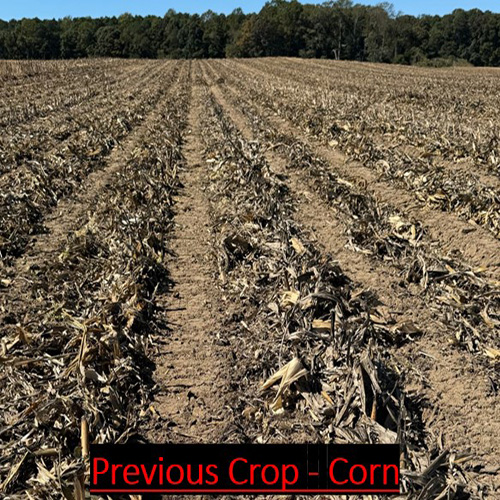
  • Prior crop being corn – one disc-ripper pass followed by two disc passes prior to application pass

The impacts can be quite significant when you consider the cost and time savings of removing pre-tillage passes out of a production system. An added benefit to no pre-tillage is conserving moisture. Tillage opens the land to moisture loss and could impact fumigation viability, resulting in more lost time. Using an application with no pre-tillage requirement insulates that moisture and allows for a much longer application window in the Fall or Spring. Another key consideration pending the crop being grown is any tillage that is done after fumigation that may move or bring in untreated soil into the application strip. Like pre-tillage, there are many considerations here based on specific operations, but it must be accounted for to ensure efficacy and a quality end result.

In our next article, we will go through trial results in several geographies across the potato production regions in the United States and look at how strip-till fumigation performed when competing head-to-head against traditional grower standard application practices.

Until then you may want to watch some of our videos on equipment or harvest trials. Or you can reach out to talk to your local sales representative here.

Alabama Cucumber Field – Fumigation Tutorial
New York Potato Harvest Trial Digs

Can a Soil Fumigant Double as a Biostimulant?

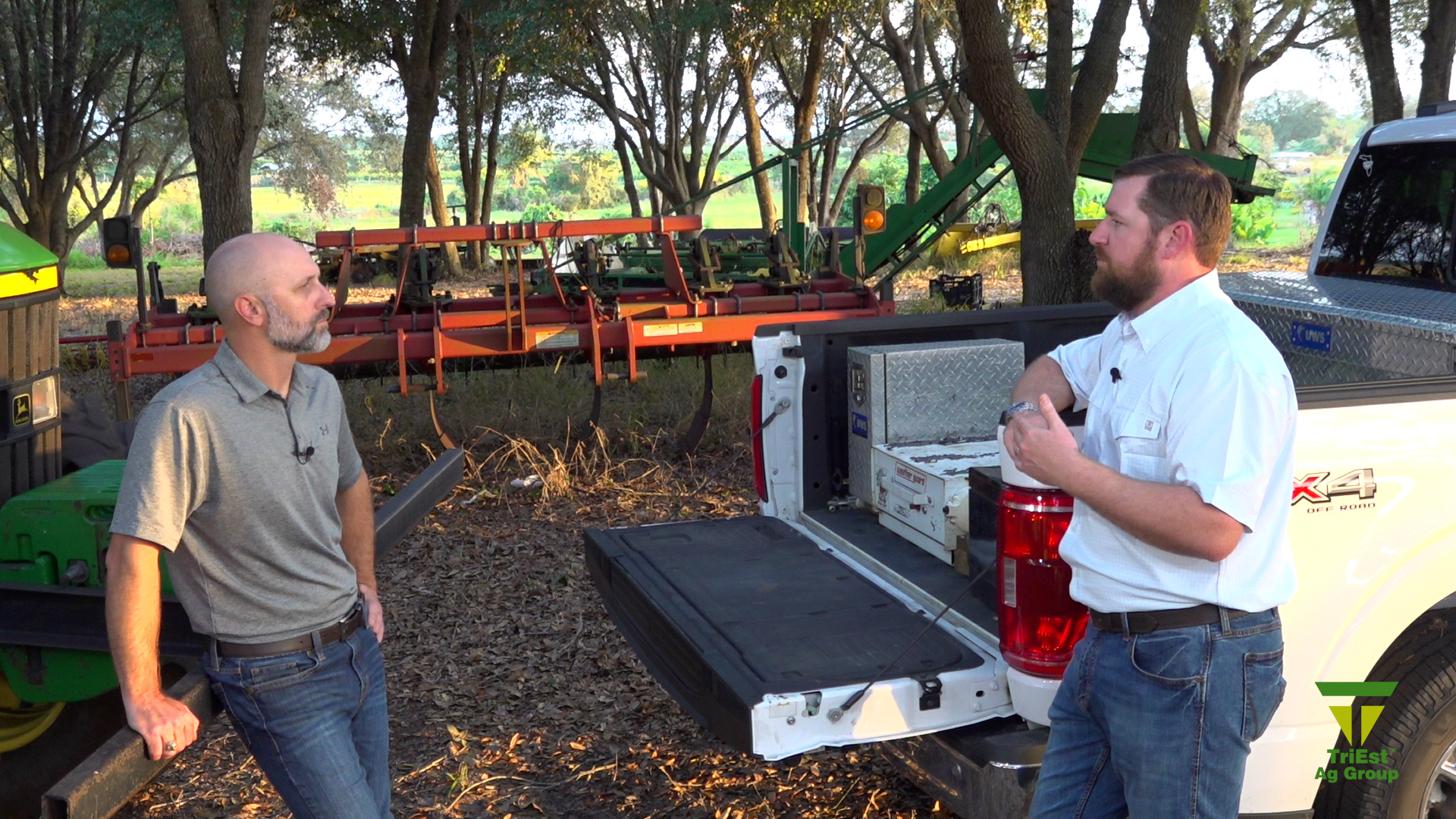
At TriEst Ag Group, we’re always exploring new frontiers in agriculture. Recently, Josh Mays, our Director of Agronomy, and Josh Freeman, Georgia Regional Sales Manager, sat down to discuss an intriguing concept: can a soil fumigant also act as a biostimulant?

In their conversation, they dive into the fascinating science behind chloropicrin, a well-known tool for managing soil-borne pests. They explain how it works, how it’s applied, and most interestingly, whether it might offer benefits beyond pest control. Their research reveals that chloropicrin could actually enhance crop yields—even in the absence of major pathogens—by influencing beneficial microbial shifts in the soil.

The duo explores early trials that sparked this line of research, shedding light on the unexpected soil health benefits they observed. The conversation also touches on the potential for chloropicrin to be used in entirely new ways, reshaping its role in modern agriculture.

TriEst Ag has a long history of using chloropicrin for pest management, but this innovative research suggests it may hold untapped potential. Could it become a regular player in boosting soil productivity and crop health?

To learn more, be sure to watch the full video and reach out to your local TriEst Ag sales representative for more information. The future of soil health might be shifting right beneath our feet!

Where in the world will TriEst Ag be?

TriEst will be attending several tradeshows and conferences that represent a variety of crops across the US in January and February and we hope to see you there at these great events.

January 8th  – Annual Blueberry Update

January 8, 2025
9:00 a.m. – 12:30 p.m.

The Blueberry Warehouse (199 Tobacco Lane, Alma, GA 31510)

This is a great event for Georgia local blueberry growers to get education credits. This is also a wonderful event to talk with vendors about your needs and plan for growing your crop in the new year.

January 8-11th – Southeast Regional Fruit and Vegetable Conference

Savannah, GA

Learn More Here

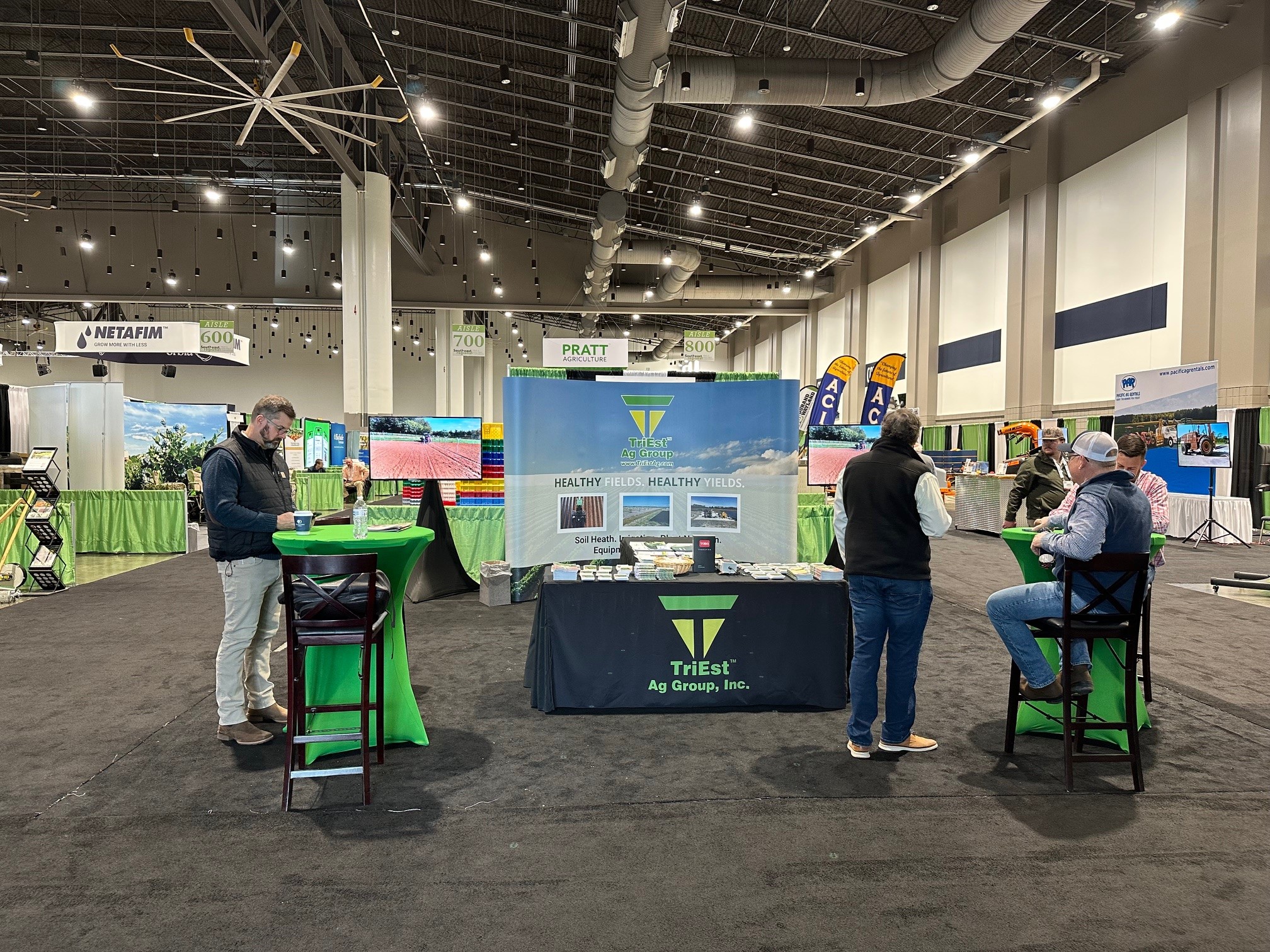
This is a wonderful education event for all fruit and vegetable growers. Our own Josh Mays will be speaking on the 10th there in an education session on Raspberry Annual Production Systems. We’ll be there in booth #701 too ready to discuss your needs and plans for the 2025 growing system.

January 9-10th – National Potato Expo

Orlando, FL

Learn More Here

Calling all potato growers! This event is full of fun education sessions, keynote speakers, fun cooking shows, and a show floor full of vendors. Our group loves attending this one and we hope you do too. Stop by the TriCal Group Strike booth #1209 to see us.

January 15th – FSGA Tailgate Event

Dover, FL

Join us at the FL Strawberry Growers Association tailgate event. We’ll be there serving up some delicious food and serving our growers who do so much work for us to have those sweet berries to enjoy.

January 15-17th – Green and Growin’

Greensboro, NC

Learn More Here

This is a wonderful event for nursery and greenhouse growers to attend for education. TriEst will be there in booth #1710 ready to discuss ag technology and irrigation options with you for 2025.

January 16th – NC Sweetpotato Commission Annual Meeting

Goldsboro, NC

Learn More Here

We’re proud Platinum sponsors of this event. It’s full of great Sweetpotato education and helpful vendors. Stop by our table to talk sweetpotatoes and growing plans for 2025.

January 16-19th – Illiana Watermelon Convention

French Lick, Indiana

Learn More Here

This is a fun event full of education and exhibitors. We are proud sponsors and exhibitors here. Stop by our table to discuss grafted plants, irrigation, and soil health for 2025.

January 19-21st – US National Sweet Potato Convention

Savannah, GA

Learn More Here

Join us at this great industry event full of education, industry news, and fellowship. We’ll be there with TriCal Group exhibiting ready to help you with your 2025 sweetpotato planting.

January 28 – 30 – 2025 Michigan Winter Potato Conference

Grand Rapids, MI

Learn More Here

The Winter Potato Conference is an excellent opportunity to learn and network with other industry professionals on a number of leading-edge topics. TriEst Ag is a proud sponsor and exhibitor at this event. Be sure to find our booth and talk to Tony Belcher about your upcoming potato planting plans.

January 30 – February 1, 2025 – MAR-DEL Watermelon Convention

Cambridge, Maryland

Learn More Here

Great watermelon Industry leaders speak on topics such as food safety, research results, disease research, legislative and regulatory issues. TriEst Ag Group and Tri-Hishtil will be there as gold sponsors with a table. Be sure to stop by to discuss grafted watermelons, irrigation, and soil health with Ben Hinson.

February 4 – 7th – NC Southern Farm Show

Raleigh, NC

Learn More Here

The Southern Farm Show is the largest annual agricultural exposition in the Carolinas and Virginia.  Filling the NC State Fairgrounds, the show hosts over 400 exhibitors, agricultural meetings, workshops and training, and everything farmers need to prepare for the coming growing season. TriEst Ag Group will be there with your growing solutions in booth #1002. Stop by to see us!

February 4-5th WPVGA Grower Education Conference & Industry Show

Stevens Point, WI

Learn More Here

Growers attending the conference will have the opportunity to get a head start on the season with expert market outlooks, research reports, information on new technologies and agribusiness advice. The Conference is a great place for growers to get the advice, tips and insights that will give them the edge they need in a tough business. There will be an excellent slate of speakers and presentations. TriEst Ag Group will be there in booth #58 exhibiting and ready to discuss your 2025 growing plans. We’re also a proud Beverage Reception Sponsor.

February 18-19th 2025 CO Fruit and Vegetable Growers Association Conference

Westminister, Colorado

Learn More Here

Join us for great networking and learning at the 11th annual CO Fruit and Vegetable conference!  We’ll be there exhibiting, ready to assist you with you irrigation, fertilizer, soil heath, and grafted plant needs in 2025.

February 19 – 23rd – National Watermelon Convention

Austin, TX

Learn More Here

The premier networking and education event dedicated to the watermelon industry. Join us in Austin, TX, for education, networking, an auction, the crowning of the 2025 National Watermelon Queen, and an unbelievable Texas experience! We’re proud sponsors and exhibitors there. We can’t wait to talk watermelons with you.

February 19-20th – NC Tomato Growers Winter Vegetable Conference

Asheville, NC

Learn More Here

Join us for this high quality educational program put together by vegetable extension specialists & agents at NC State University. We hope that you take advantage of this opportunity to learn about current issues associated with vegetables. TriEst Ag Group is a proud Gold Sponsor and exhibitor at this event. We can’t wait to see you there to talk 2025 growing plans and solutions.

February 25th – Georgia Citrus Association Conference

Tifton, GA

Learn More Here

Join us for some great education and industry fellowship at this Georgia Citrus Association Conference. TriEst is a proud sponsoring member and will be there with a booth ready to discuss your citrus growing plans for 2025.

Looking for a New Career Opportunity?

TriEst Ag Group is hiring. Even when we aren’t hiring, we’re excited to hear from knowledgeable people who may be a great fit for our company. We are a distributor and applicator of soil fumigants, irrigation, fertilizer, equipment, grafted plants, and other products with a focus on fresh fruits, vegetables, and tobacco. We have developed a unique group of company brands that allows us to offer growers our support from pre-plant through harvest, season after season.

We have positions in the field applying our soil fumigant products, building and installing irrigation systems, and working directly with customers. TriEst has 6 walk-in branch locations across the southeast to serve growers and support sales regions across the US. We also have the corporate office that handles management, paperwork, accounting, etc.

As an industry leader with more than 50 years’ experience, TriEst Ag Group offers innovative options and solutions that protect crops, people, and the environment with honest, long-term relationships that make us the first call a grower makes when they need help. We are a part of the family of companies known as the TriCal Group. While TriEst has multiple locations throughout the southeast, the TriCal Group family of companies is world-wide with more than 25 affiliated companies and even more locations. We hire from within where possible so that our employees have room to grow.

Come join our team.

Jobs in:

  • Sales (Outside & Inside)
  • Licensed Applicators
  • Irrigation Techs
  • Agronomy
  • R&D
  • Accounting
  • Finance
  • Administration
  • And more

 If you’re interested in working with our company and becoming part of the team visit our Career Page and Indeed.com for our current open positions and/or send your resume to HR@triestag.com.

Breaking Down the Details on Chloropicrin

Let’s break down the facts on why Chloropicrin is a powerful tool for providing consistent return on investment for growers of specialty crops around the world. Chloropicrin can be used to optimize soil health and productivity by combating pests and stimulating beneficial soil microbes.

Chloropicrin has been used as a foundational agricultural product for soil-borne pest suppression in specialty crops throughout the world for over 60 years. It is a bio-nutritional soil fumigant, that breaks down into elements that are naturally utilized by plants: carbon, chlorine, nitrogen, and oxygen. After breaking down, there is no reside left in the soil, which in turn results in no plant residue.

After being applied into the soil as a liquid through shank (broadcast or in-row) or drip system application, Chloropicrin rapidly becomes a gas that does not move down or into ground water. It does not need to activate with water and moves through soil pore air space for a wide area of effect.

Chloropicrin does NOT sterilize the soils it is used in. It shifts the soil microbial community creating an environment for native microbial populations to thrive. It has shown to have novel effects on soil microbiome as a bio-stimulant, in addition to pathogen suppression. Increases in the abundance of native fungi and bacteria such Trichoderma, Bacillus, and Pseudomonas have been seen in many on-farm trials across a wide range of geographies and cropping systems.

The shifts within the soil microbiome generate a wide range of effective use rates for Chloropicrin based on targeted prescriptions that are determined by pest pressures, crop rotation programs and grower yield goals. We recommend higher dose ranges for season long suppression of major soil-borne pests and lower dose ranges for increases in crop stand establishment and accelerated growth.

Through soil analysis we see soil microbiome shifts across all rate ranges, resulting in better germination, early plant vigor and uniformity. Contact us today to see first hand what Chloropicrin can do for your soil, crops, and marketable yields.

CELEBRATE SMART IRRIGATION MONTH WITH TRIEST

TriEst Ag Group proudly celebrates Smart Irrigation Month by helping growers maximize water-use efficiency every day.

Smart Irrigation Month is a public awareness campaign to promote efficient water use. Focused on July, Smart Irrigation Month highlights effective practices and innovative technologies to

  • increase crop yield per acre.
  • apply water and nutrient inputs more precisely for improved results with little to no waste.
  • minimize runoff and topsoil erosion.
  • help protect and preserve water supplies for today and the future.

Smart irrigation technologies equip farmers with information they need to know regarding when and how long to irrigate. They can input variables like crop water needs and soil type, while using scheduling programs that monitor local weather conditions and soil moisture.

These data points give farmers the information necessary to irrigate with precision, minimizing stress from over- or under-watering. With a finger on the pulse of your crop’s water needs, crop quality can be improved and yields can be maximized. 

TriEst Ag Group believes in smart water-saving practices and is dedicated to delivering real results by helping growers

  • design irrigation systems with zones and irrigation scheduling programs for more efficient water and fertilizer use.
  • install irrigation systems that use real-time weather data and soil moisture sensors to automatically adjust watering to meet crop needs.
  • precisely apply water and nutrients to minimize evaporation, runoff and waste.
  • qualify for government financial assistance to conserve ground and surface water and improve water quality.
  • meet federal, state, and local environmental regulations.

For more information about how TriEst Ag can help you be more efficient contact us today.

Smart Irrigation Month is an initiative of the Irrigation Association, a nonprofit industry organization dedicated to promoting efficient irrigation. Visit www.smartirrigationmonth.org to learn more.