Healthy crops start with healthy soil. For growers facing soil borne pathogens, nematodes, uneven germination, or early crop stress, chloropicrin soil fumigation offers a proven pre-plant tool to help create a more favorable, productive growing environment.
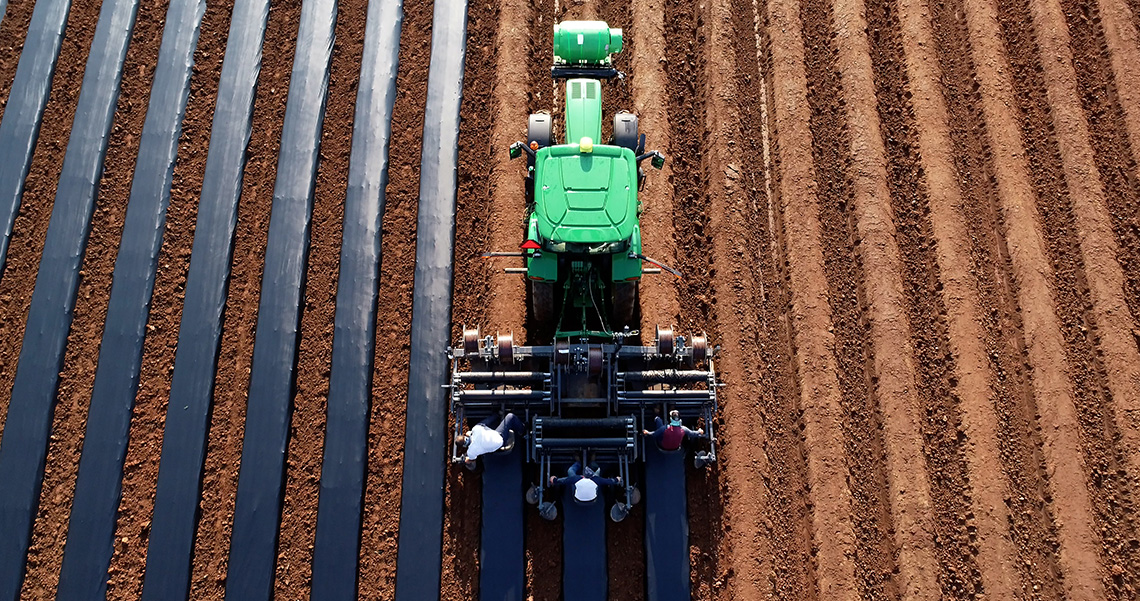
Chloropicrin has been used in specialty crop agriculture for more than 60 years and is labeled for use before planting across all crops. Applied to the soil as a liquid, it rapidly becomes a gas and moves through soil pore space, helping provide broad-spectrum suppression of soil borne pathogens and nematodes. It can be applied through shank applications, either broadcast or in-row banded, as well as through drip systems.
One of the key benefits of chloropicrin soil fumigation is that it does not sterilize the soil. Instead, it helps shift the soil microbial community, creating a more favorable environment for native beneficial organisms to thrive. By supporting beneficial fungi and bacteria such as Trichoderma, Bacillus, and Pseudomonas, chloropicrin soil fumigation can help improve soil health and promote stronger crop performance.
Chloropicrin also leaves no plant or soil residue and breaks down into elements naturally utilized by plants, including carbon, chlorine, nitrogen, and oxygen. By helping reduce pest pressure, improve early plant vigor, and support better germination and uniformity, chloropicrin soil fumigation can play an important role in building healthier fields and more consistent yields.
At TriEst Ag Group, we work with growers to develop soil fumigation programs that match field conditions, crop goals, and pest pressures, helping every crop get the strong start it deserves.