
Following the initial success of our strip-till fumigation trials, our team continued refining the system to improve application precision, soil coverage, and seed-to-fumigated-soil contact. Part II demonstrated that the foundational strip-till configuration delivered promising performance, including strong suppression of common scab and system efficiency comparable to grower-standard raised, pressed beds.
However, the opportunity to elevate the system further became clear.
Part III highlights the next stage of development, drawing from TriEst’s engineering work and the evolution of our Strip-Till Equipment platform, which was designed to enhance adaptability, optimize seedbed conditions, and improve fumigant coverage across a range of field environments.
Refining the System: What We Set Out to Improve
Year one demonstrated the potential of strip-till fumigation as a reduced-tillage, targeted soil fumigation solution. But our data also underscored three improvement priorities:
• Bringing the application point closer to the seed piece to support more consistent yields.
• Increasing treated soil movement into the planting zone.
• Improving consistency in surface sealing to maintain fumigant concentration.
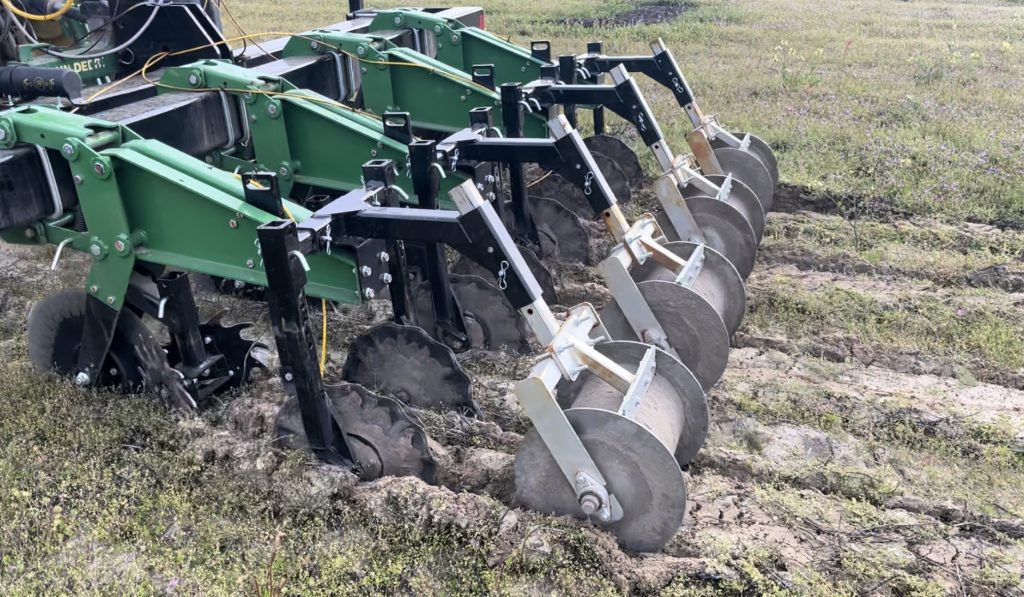
The Strip-Till Equipment framework, with its modular design and adjustable soil-finishing components, provided the adaptability needed to make these refinements.
Key Equipment Enhancements Based on Trial Learnings
1. Adjustable Bed-Forming Capability
Early field work indicated that pulling more fumigated soil into the seed zone could increase tuber set and uniformity. The Strip-Till Equipment system was adapted to allow operators to create a modest 2–3 inch raised bed when desired. This improvement helped ensure that the planted seed piece consistently engaged with treated soil for improved early development
2. Floating Soil-Finishing Rollers
To improve surface sealing and reduce variability caused by different moisture and residue conditions, floating rollers were added to deliver more consistent compaction and closure over the chisel trace. This upgrade addressed chimneying potential and helped maintain fumigant concentration in the zone where it is most effective.
3. Adjustable Closing Discs for Flexible Seedbed Architecture
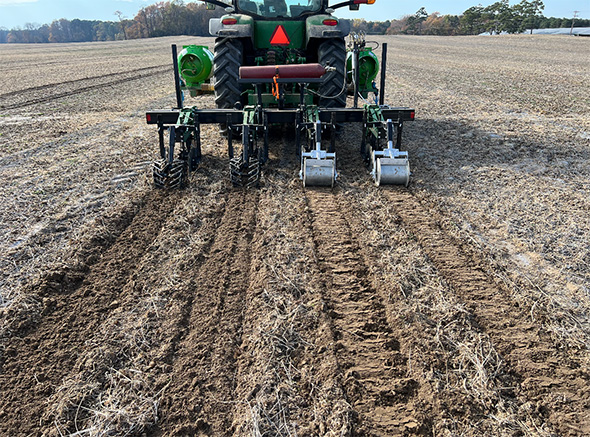
Closing disc assemblies were redesigned to allow simple adjustment up or down to fine-tune bed height or maintain a flat finish, depending on the grower’s planting system. This ensured that strip-till fumigation could integrate smoothly with both raised-bed and flat potato production systems without major equipment changes between fields
4. Dual-Depth Fumigation Integration
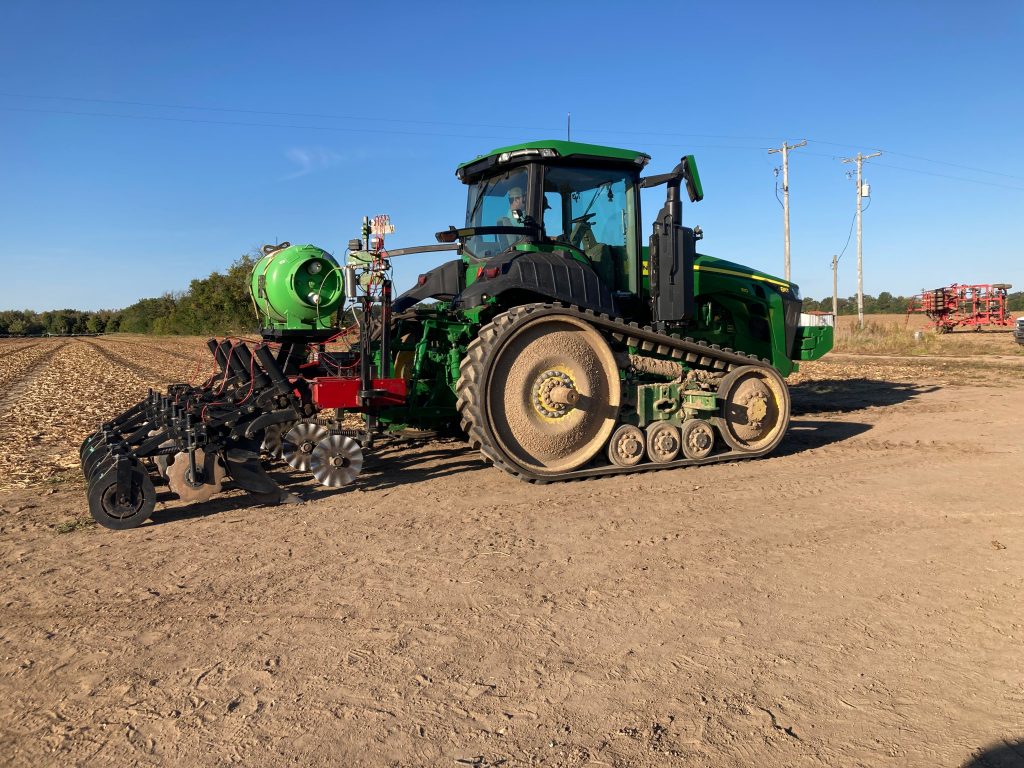
One of the most impactful advancements was the addition of dual-depth application capability, with approximately four inches of vertical separation between application zones. Dual-depth application improves soil coverage, supports more thorough pest and disease suppression, and provides greater flexibility in managing soilborne challenges such as nematodes or scab organisms. This feature represents a major step forward in precision soil fumigation and was designed specifically to enhance adaptability across different soil types and tillage practices
Performance Observed in Follow-Up Trials
With these enhancements implemented, the second year of evaluation focused on three primary performance metrics:
1. Improved Placement Relative to the Seed Piece
Moving application depth and geometry closer to where the crop is produced resulted in more consistent stand establishment and early vigor compared to the first year. Bringing the fumigated zone into better spatial alignment with the seed piece directly addressed the yield gap observed in Part II.
2. Enhanced Soil Coverage and Integrity
Adjustable bed-forming, paired with floating rollers, produced a more stable surface seal and improved horizontal movement of treated soil. This created a more uniform treated zone that better supported tuber initiation and reduced variability across replications.
3. Greater Flexibility with Fewer Adjustments
One of the core principles of the Strip-Till Equipment system is adaptability with minimal downtime. Across diverse conditions, operators were able to adjust bed height, closing pressure, and application depth quickly, reducing field variability and improving operational efficiency. This aligns with the original design intent of developing a system compatible with no-till, strip-till, or full tillage environments without major mechanical modifications
Where This Leads: A More Precise and Adaptable Fumigation System
The combined results of the first two years confirm that strip-till fumigation, when paired with the refined Strip-Till Equipment system, offers a strong path forward for growers seeking:
• Reduced tillage with maintained soil fumigation efficacy
• Improved seed-to-treated-soil contact
• Greater control over fumigant placement and coverage
• Flexibility across planting systems and soil conditions
• Efficient field operation with minimal adjustments
Our commitment to continuous improvement in equipment and application strategy supports growers as they adopt reduced-tillage systems without compromising crop protection or yield potential.
To learn more about how Strip-Till Equipment and advanced soil fumigation systems can support your operation, contact your local TriEst Ag Group representative. We welcome the opportunity to discuss how this approach can be tailored to your specific crops, soils, and production goals.